
As part of an ongoing push to redefine what gaming technology can do, HP challenged our team to go beyond the desk. Our challenge was to design a meaningful experience that uses neural data not just to measure performance, but to actively improve it.
The concept received positive feedback from HP AI Product Designers, who highlighted its focus in emotional regulation and intentionality in mindfulness as a medium.

Target the Gamer "Tilt" Before It Snowballs in FPS Games
If these high-stress moments are not regulated, competitive gamers are susceptible to snowballing into more moments of poor decision making, emotion over logic, and poor self esteem. Our system intends to intervene before this negative feedback loop can begin and give competitive gamers the tools to be more self aware of how their emotions impact their performance.

Competitive gamers rely on noise-canceling headphones to hear footsteps, customizable keyboard keys, etc. Our product should add one layer to this.
Gamers don't want someone constantly in their ear telling them what to do different. We give gamers the insights to encourage iteration in coming games.
Our intervention needs to affect how gamers approach their gaming style such that their usual gaming metrics improve overtime.
The provided brain data should inform certain decisions in-game and refrain from causing confusion and/or deep introspection beyond the game.

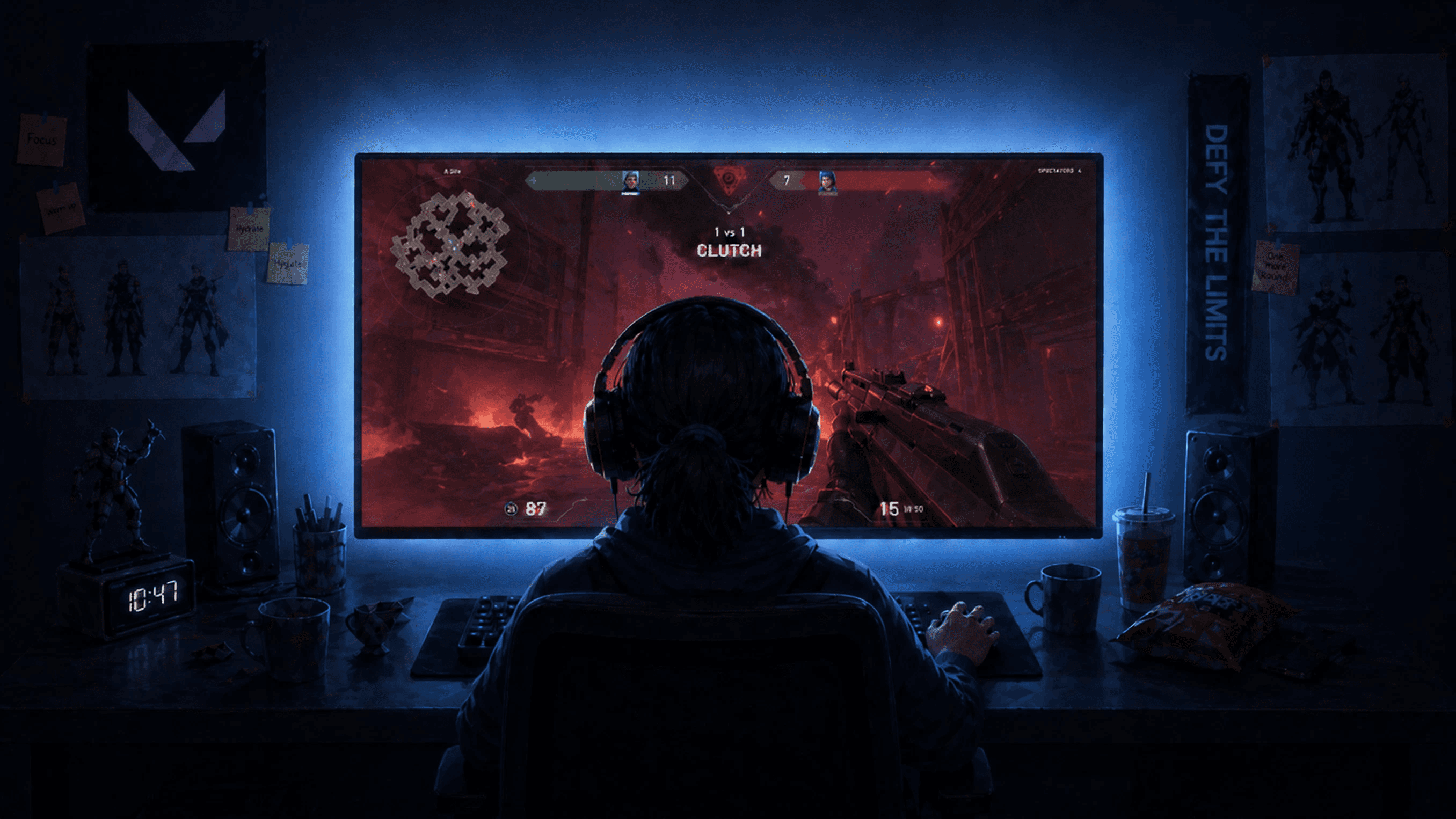
The current screen display is extended onto the walls behind the screen to create an explosively bold and immersive experience, bringing another dimension to noise cancelation and hardware add-ons for focus.

Our system aims to target the high-stress moments that are most likely to lead to a negative spiral based on previous games and learned gaming patterns, integrating OpenAI’s API into our system. Cutting away from the immersive colors of the screen, a breathing blue light was glow, simulating awareness and immediate calm.
Direct Correlation, Minimal Introspection
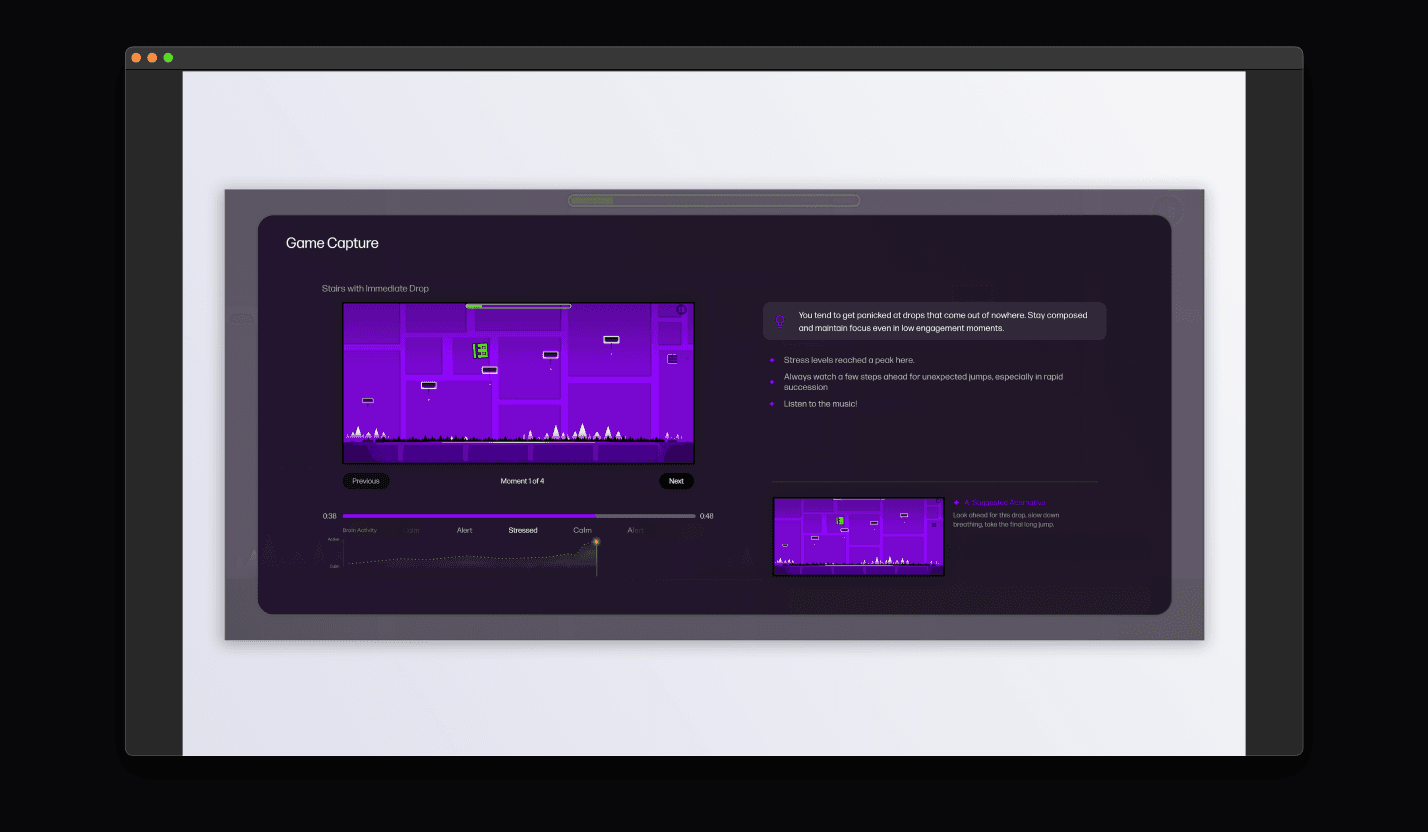
Streams and YouTube videos of gameplay are familiar to competitive gamers. This post-game analytics allows gamers to rewatch their own clips where they reached a predicted high-stress peak and their emotions side-by-side. This direct correlation promotes self reflection rather than a coach-in-your-ear-at-all-times.
Based on gamers' learned patterns, gamers receive tips curated to their specific game as well as an AI-generated clip of another decision they could consider to improve next time.
Gamers expressed how these lights would "go crazy" with their current setup and they'd want to see more about their emotions during game.


