
duolingo
Context
Remember your last conversation in a new language...
The bead of sweat forming at your temples. The instant rush of heat that takes over your body. Broken sentences, hoping the other person puts it together correctly.
This is not a problem Duolingo caused, but it is Duolingo's gap to close
Language learners are driven by the desire to travel, connect, and grow. I was challenged to design a Duolingo feature that connects users in real time to transition from solo practice to comfortable real world conversation.
Solution
Friend Conversation Quest
Friends are paired daily based on language fluency and prompted into real, low stakes conversation practice with the person they already trust.
Research
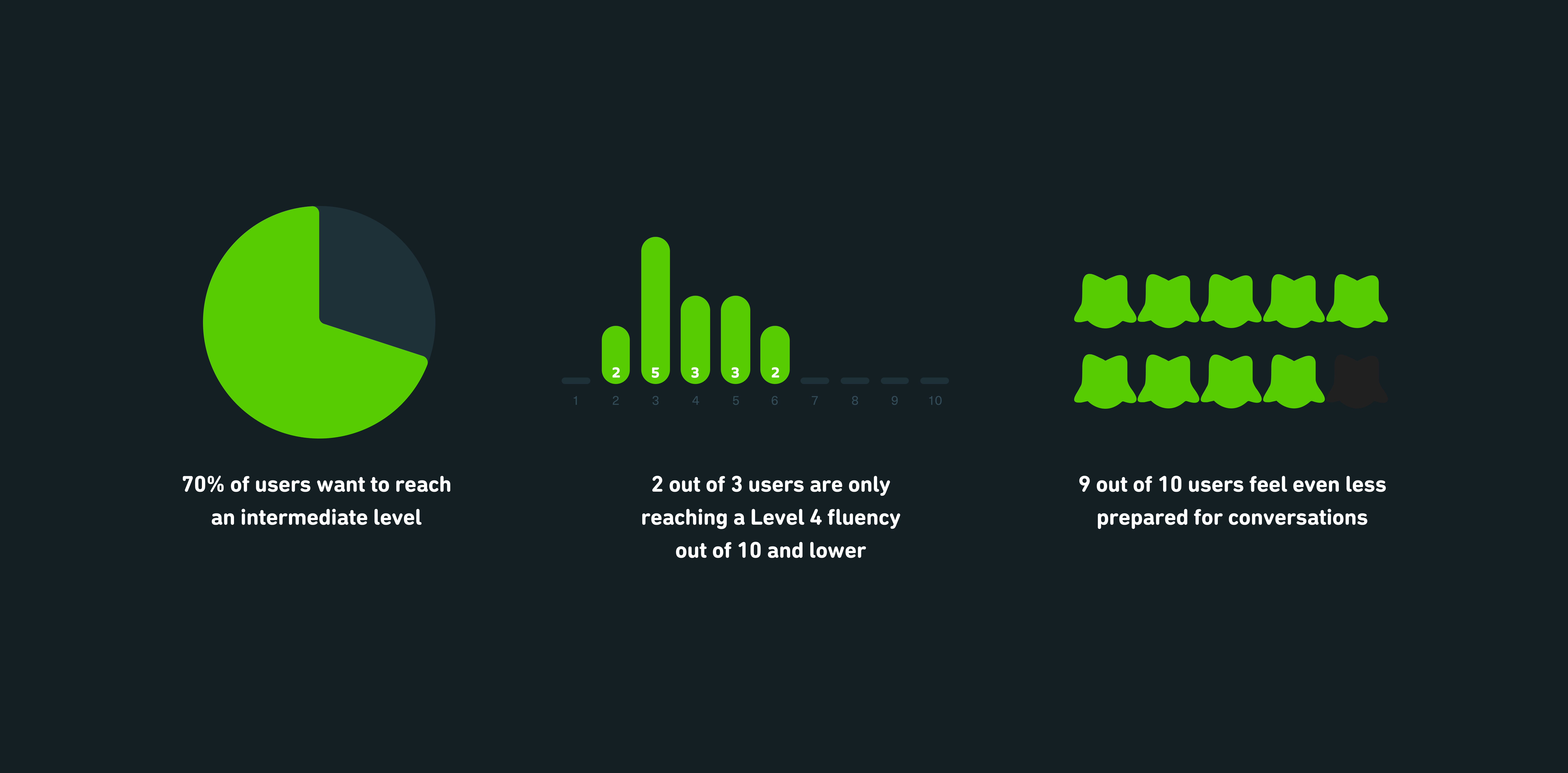
Language learners see getting to an intermediate level as a far fetched dream
I surveyed 22 Duolingo users and one frustration kept surfacing: they couldn't get past a certain point, and Duolingo had become an app they couldn't let go of because of their ongoing streak.
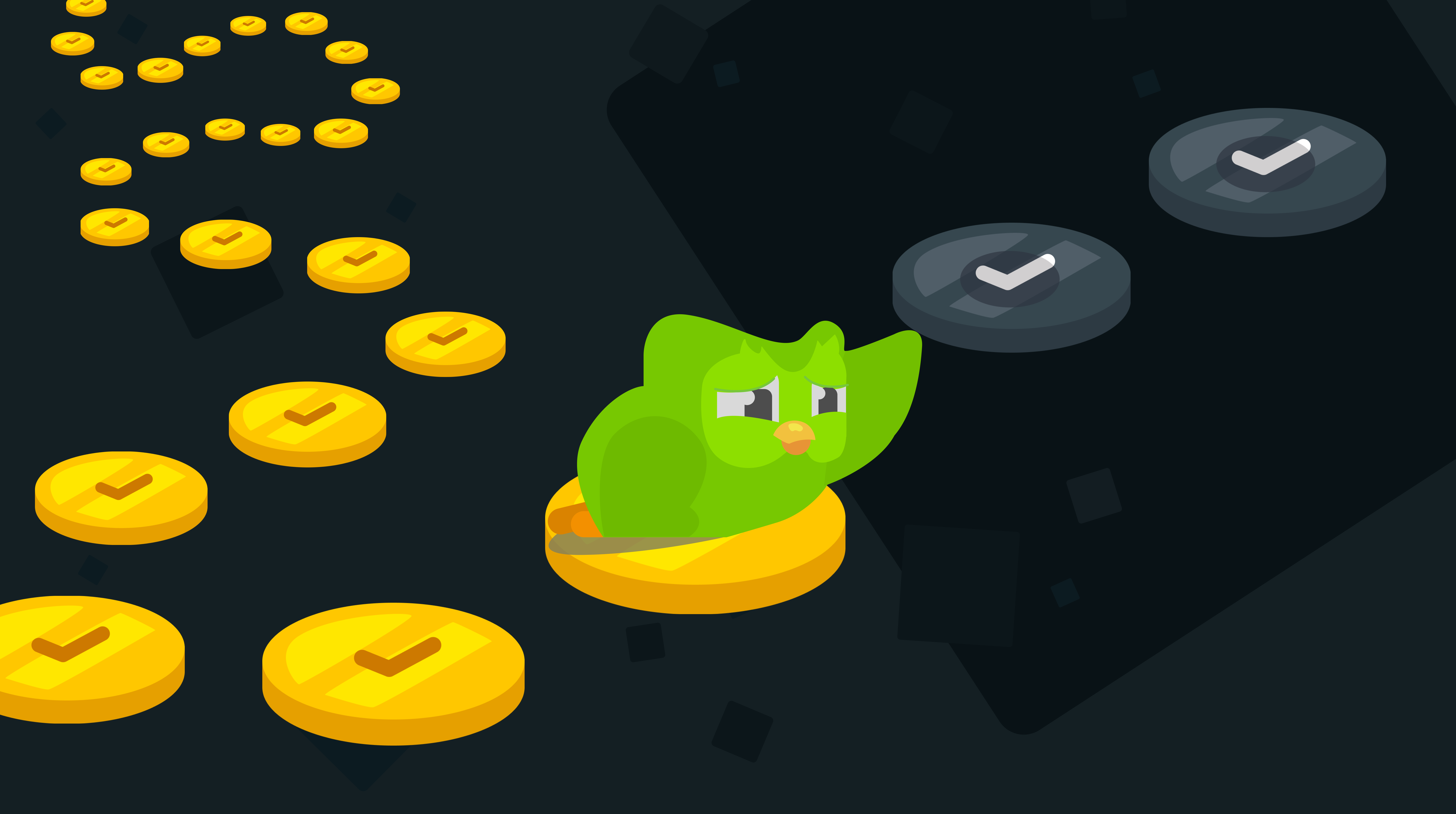
Over reliance on rote learning leads to plateaus
Duolingo lessons lean heavily into rote learning, or recognizing the right answer from a set of options rather than producing it from scratch. That's recognition, not recall. And training recall is like training muscle memory.
Pain Points
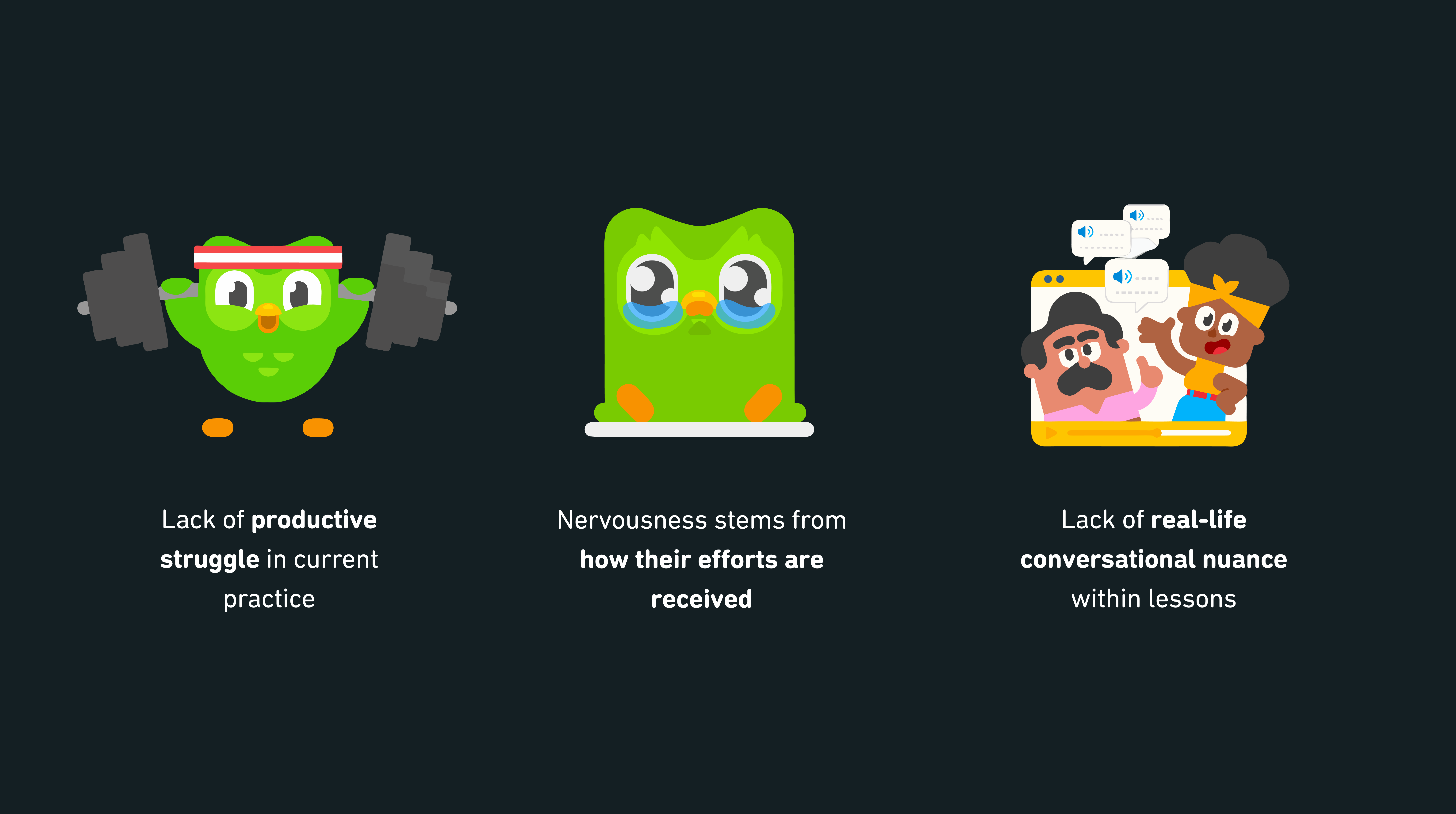
Learners feel anxious and unprepared for real world conversation
There's a gray space learners get stuck in where they want room to productively struggle, but also fear how a real person will react when they get it wrong.
Learning Design
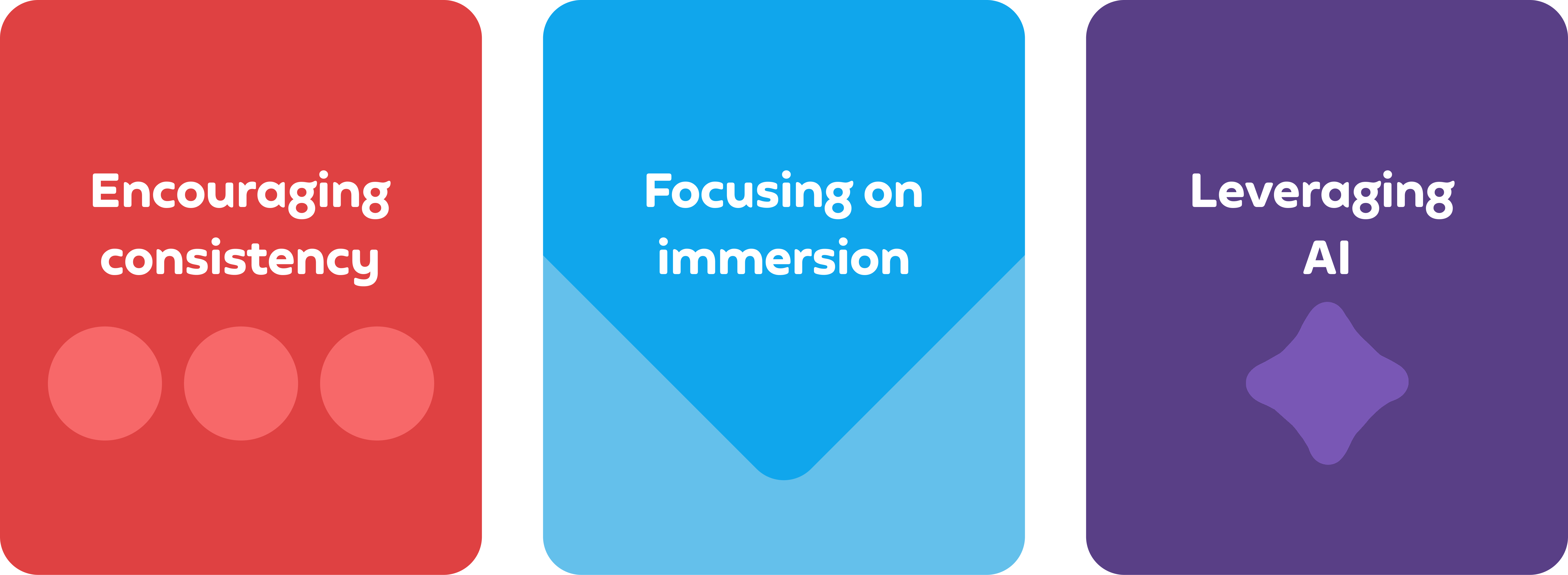
AI, immersion, and consistency are keys to learning success
Before ideating, I wanted confidence that whatever I built was aligned with how people actually learn—not just what felt emerging. Sources from Duolingo and Harvard pointed to these three keys, and I leaned into them.
Pivot
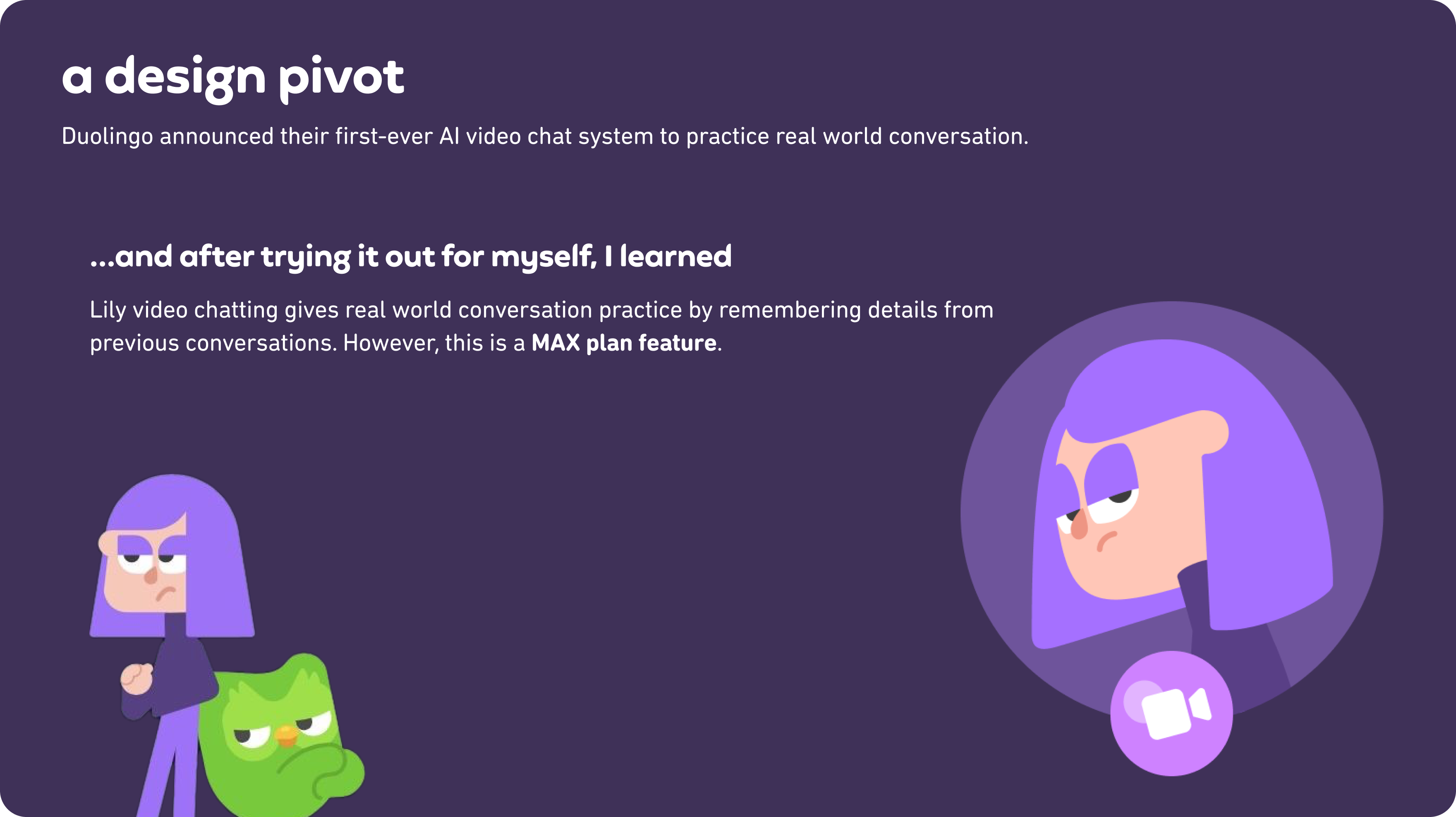
Duolingo introduced Lily, its first AI video chat feature
I still wanted learners producing language on their own, not selecting it from a menu. But this shifted where I focused.
I wanted to focus on a feature that would uphold Duolingo's core values of free and accessible for all people. 21 of the 22 users I surveyed were on the standard, free plan. A video AI feature wasn't going to reach them.
Design Considerations
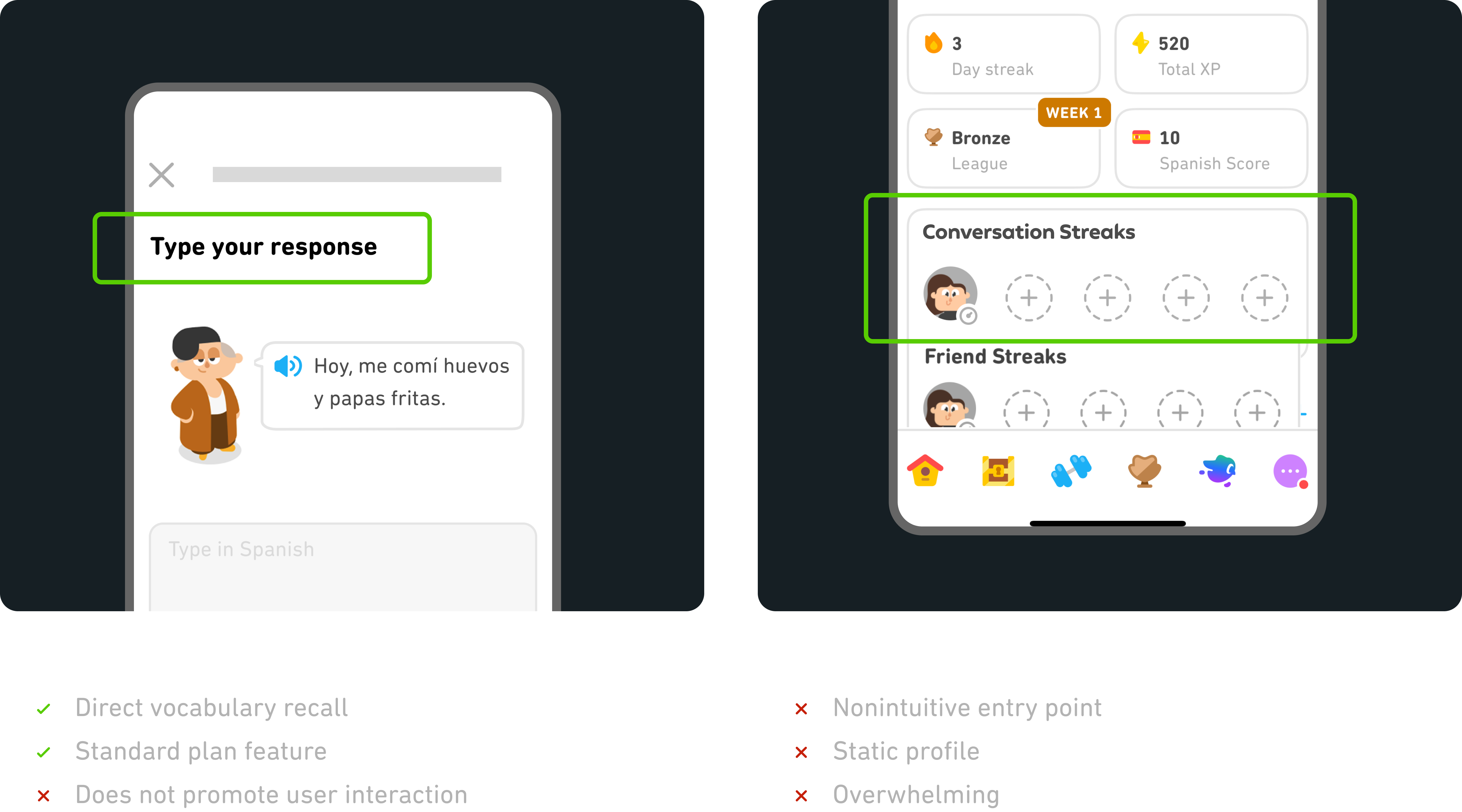
I prioritized vocabulary recall and a safe practice environment for standard plan users
Interviewees pointed to something valuable: maintaining streaks with friends or practicing with someone they already knew made the whole thing feel less exposed.
Design Decisions
A safe space for learners to build skills with nuanced conversations
To address the feedback as well the seesaw of resistance, we designed it to promote customization, giving teens control over their experience and increasing adoption.
Practice with a friend
Here, mistakes are okay and carry no negative effect. You can practice without worrying about how your effort will be received.

Know whether you're on the right track
Learners can reference a corrected version of their message as well as revisit corresponding grammar rules to see exactly how to improve their phrasing.
Don't worry about how to start the conversation
When users enter the chat, they're given a prompt that accounts for the overlap in both their skillsets so no one has to write the awkward first message.
Practice across languages
Learners can practice with friends who are learning a different language than they are. Idioms and metaphors are interpreted based on context.

Nudge a friend to keep going
Learners can send high-fives to celebrate completing a quest together or send a gentle nudge to encourage a friend to continue the conversation, building consistency.
Reflection
What I've learned
Intention starts with research
Duolingo's curriculum is backed by science. That challenged me to design just as consciously—to keep asking myself what the intention behind each design was.
Keep moving, just keep moving
This was a quick project cycle, between midterms and events. It taught me to think fast, not just thoughtfully. To see if something worked, I tried it first and went back if it didn't.
