Demo
Give your feelings a physical sound to move through
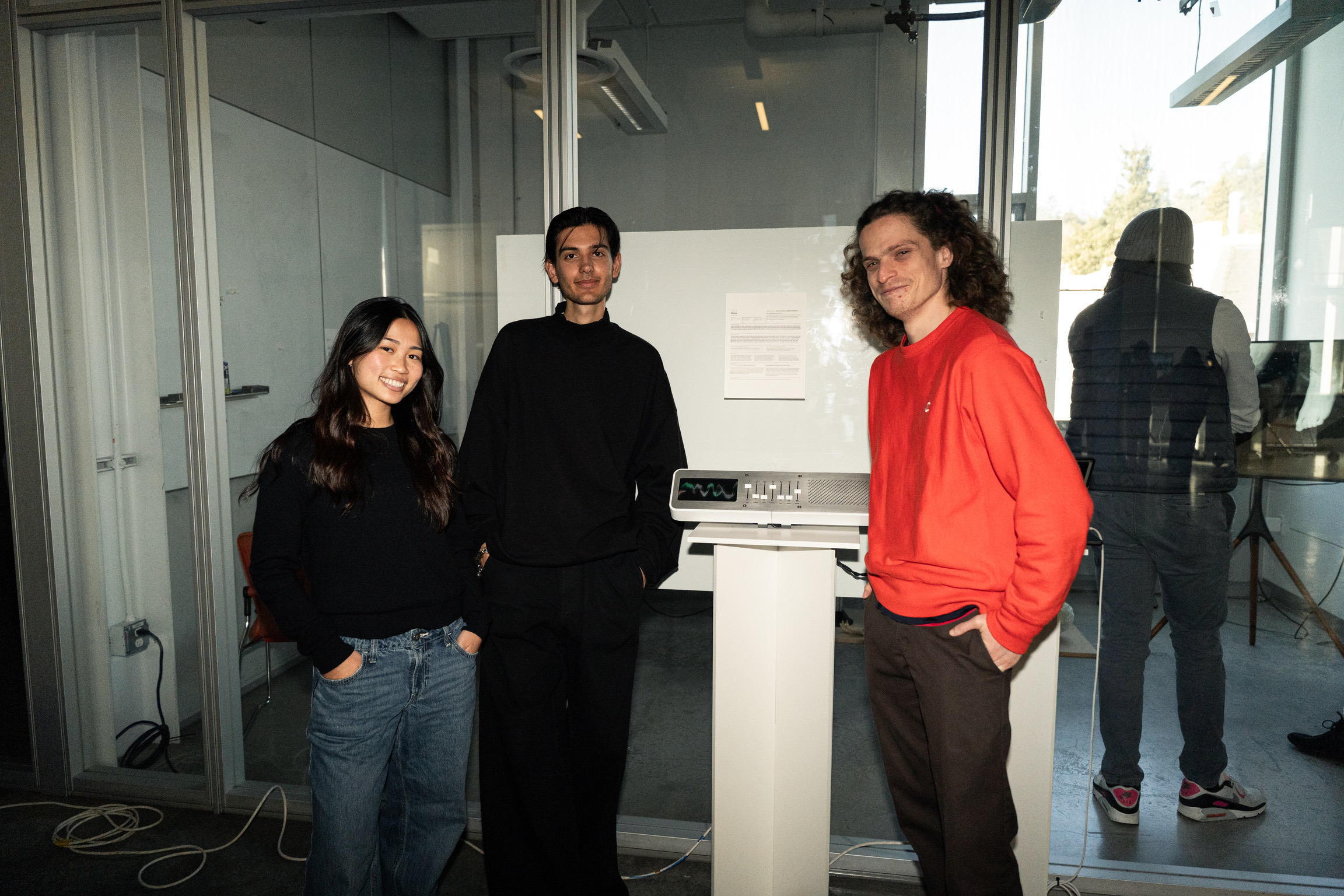
Muse invites people the space to embrace the ebb and flow of human emotions through a personalized, emotionally adaptive audio experience. Our bodies hold emotional responses that, in this era, often remain the last thing tended to.
Context
Imagine your boss crediting another person for the work you've poured into
You come home steaming. There's a tinge of sadness and defeat. You input your emotions through 7 different sliders and go about your household duties, subtly guided through an emotional journey from current mood to a more uplifted state.

System Design
Translating Human Feelings into AI Parameters
Instead of having users chugging away text prompts into a chatbot, Muse uses physical hardware as a tangible UI for emotional tuning input.
Emotion Mapping
7 sliders with research-backed emotional dimensions (Joy, Sadness, Love, Confidence, Anger, Anxiety, and Serenity).
Dynamic Weights
The sliders output numerical weights that feed directly into Google's Lyria API to generate unique instrumental tracks.
The Adaptive Journey
Muse meets your mood where it is, sits in it with you, and gradually shifts parameters toward an uplifted frequency.
Impact
In the age of AI, we aim to celebrate what it means to be human
To be human is to feel. To know that we can't have the good without the bad, and vice versa. Muse is our attempt at blending human input and generative audio with sleek home design that seamlessly integrates into your existing space.
Reflection
What I've learned
Emotion is subjective
With more time, we would refine how we afford the subjectivity and complexity of emotion amongst people.
Designing for feeling
Evaluating our work on how it makes people feel kept us grounded. Holding onto that empathy allowed us to stay curious and open as the physical form factor evolved from desk to wall.
